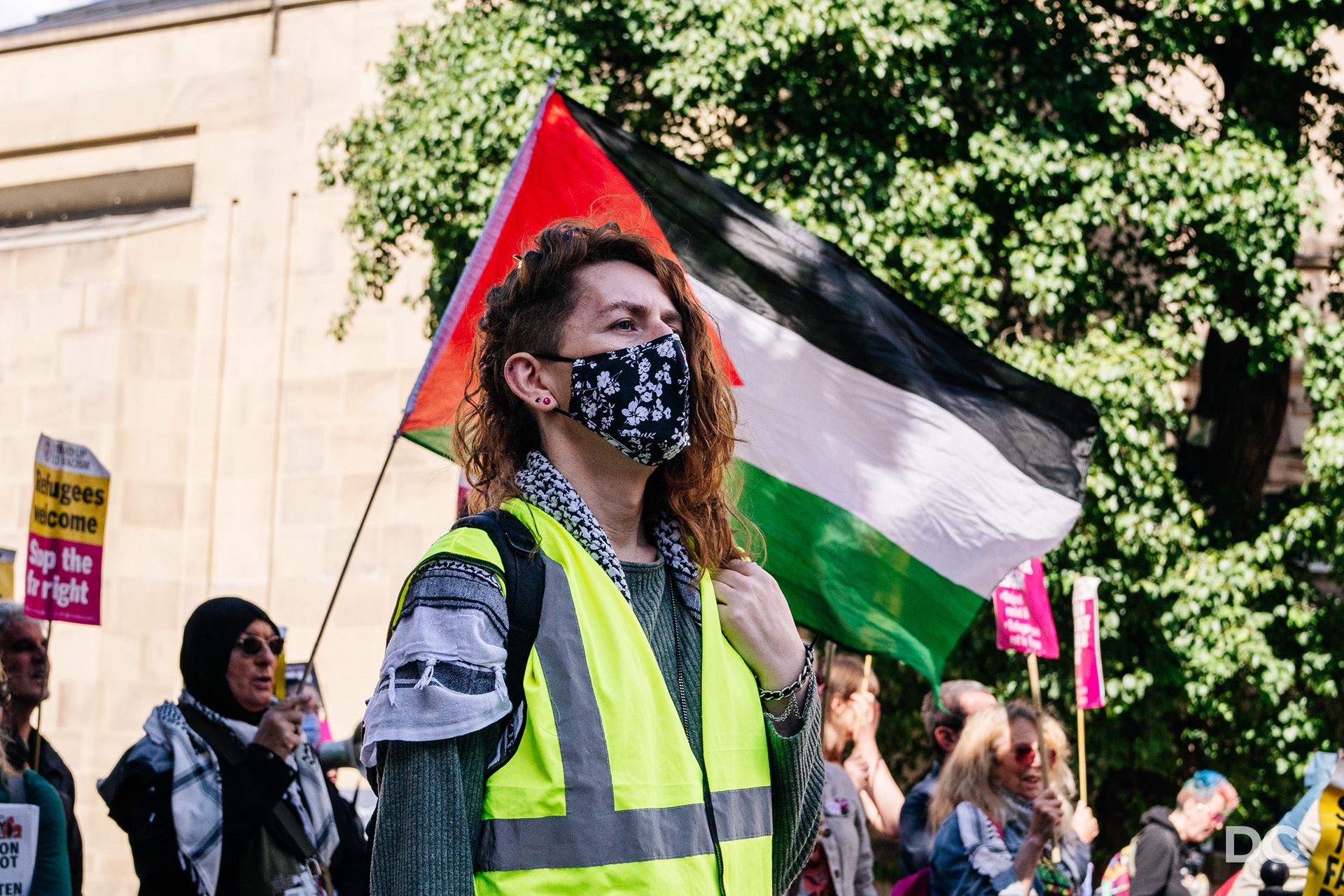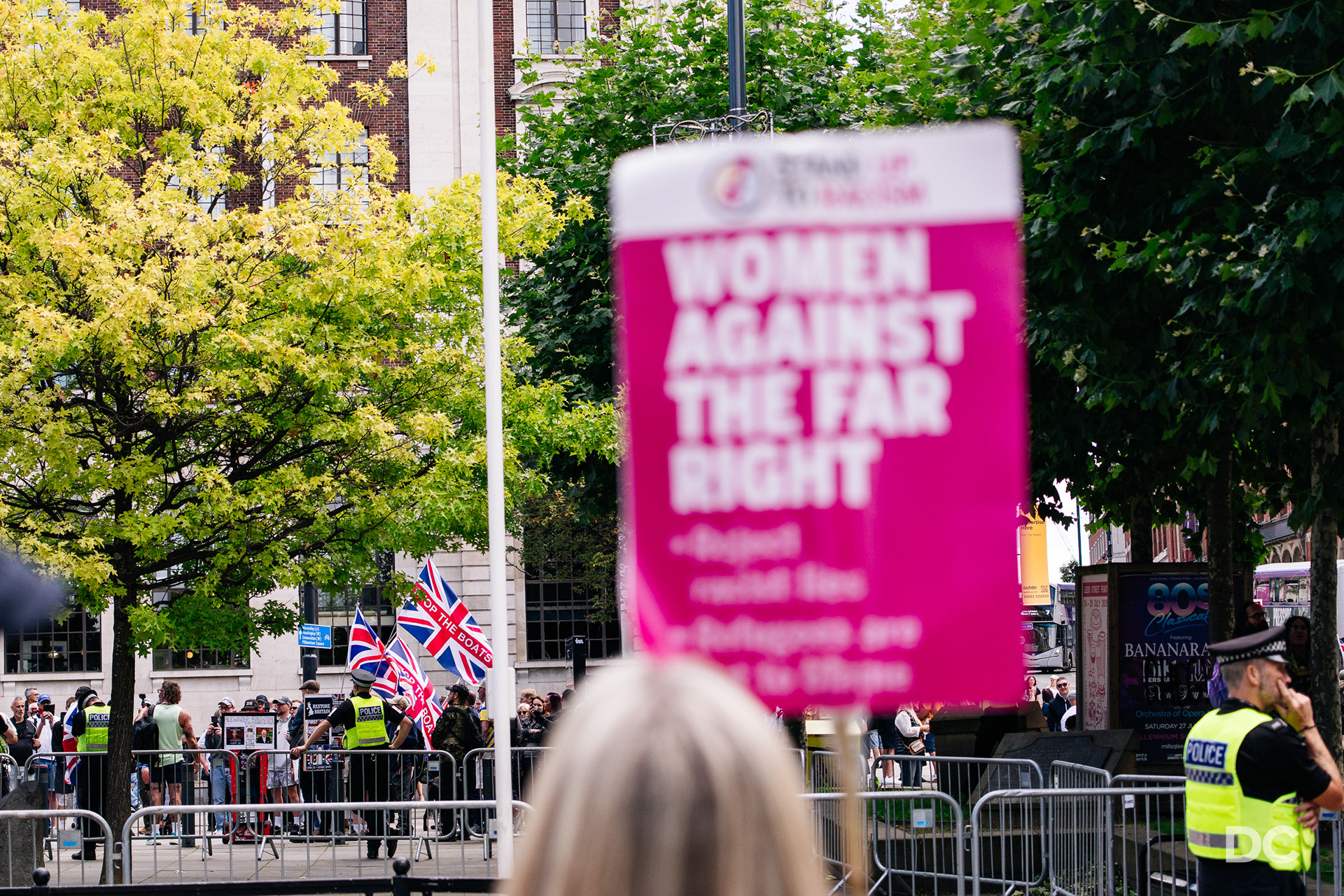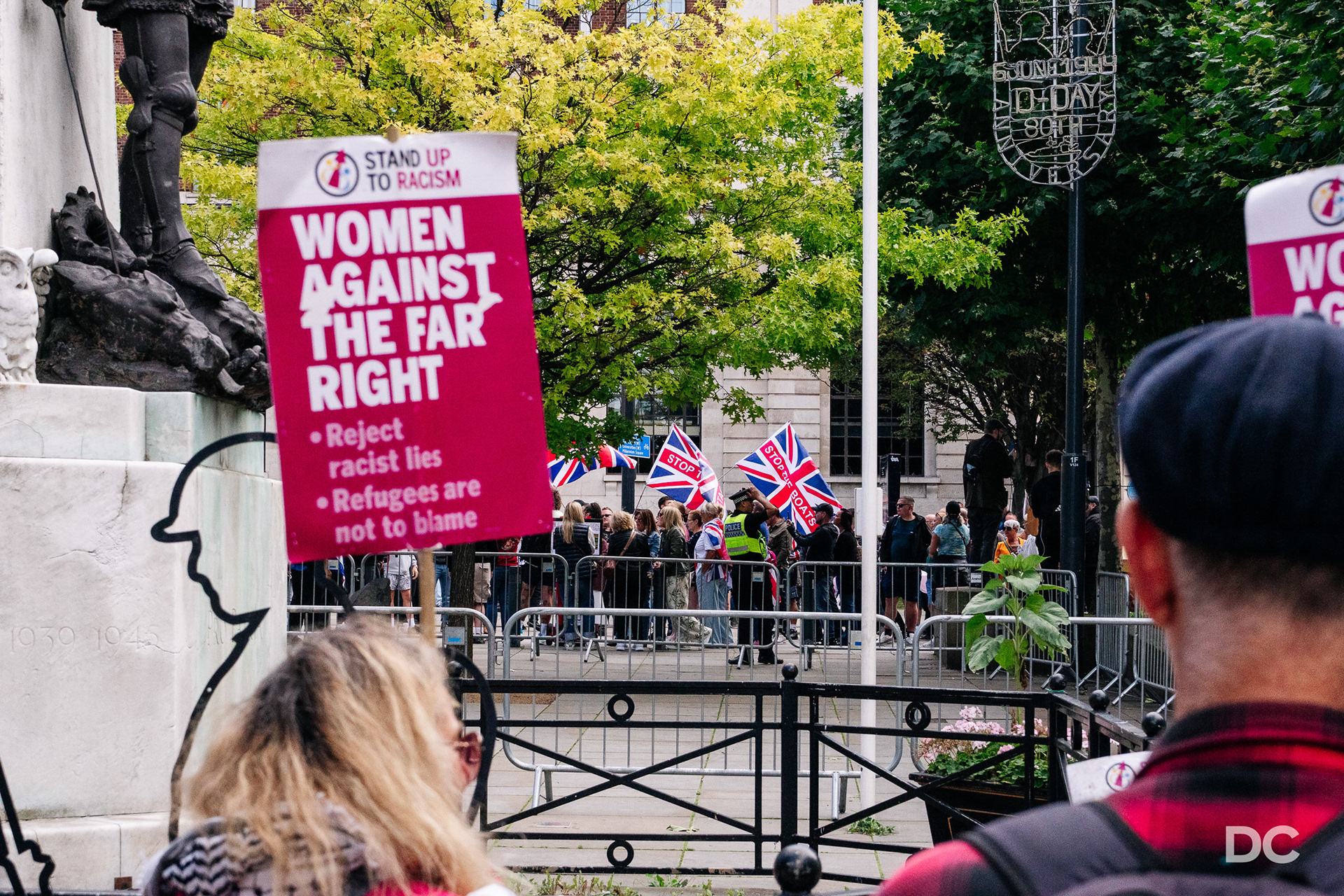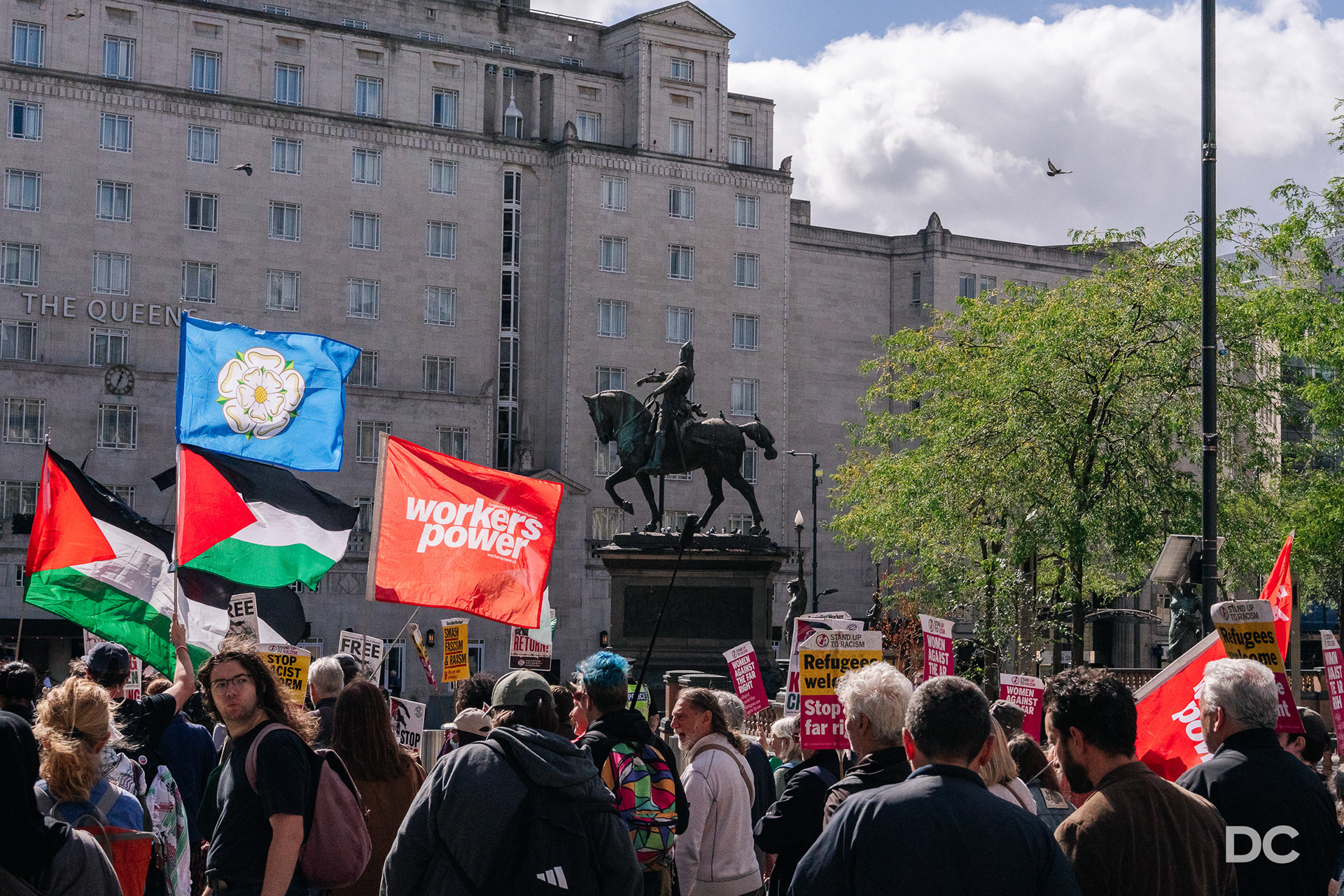
I attended as an independent photographer. Throughout my visit, I remained neutral and showed no affiliation with either group. This account reflects what I personally witnessed and experienced.
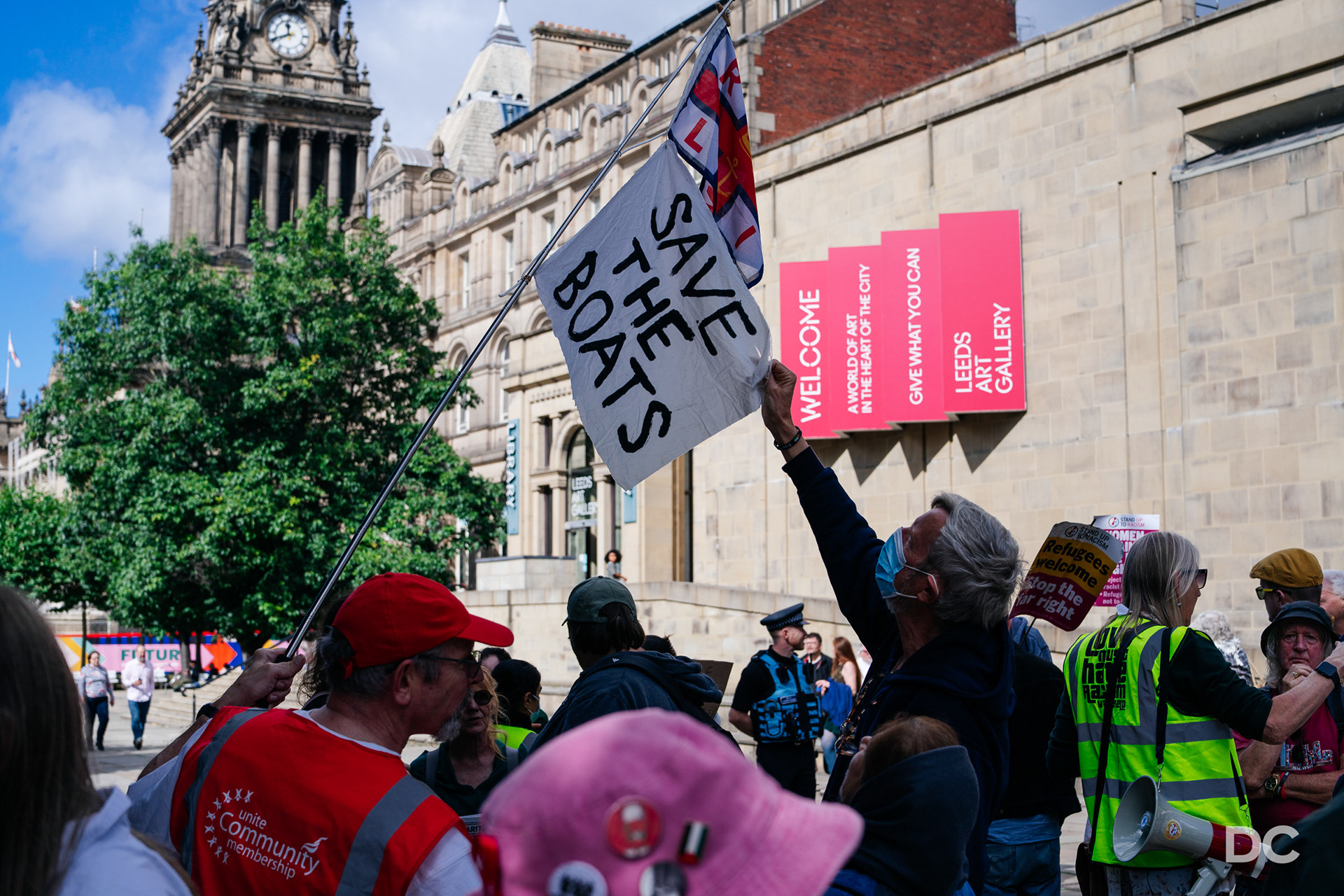
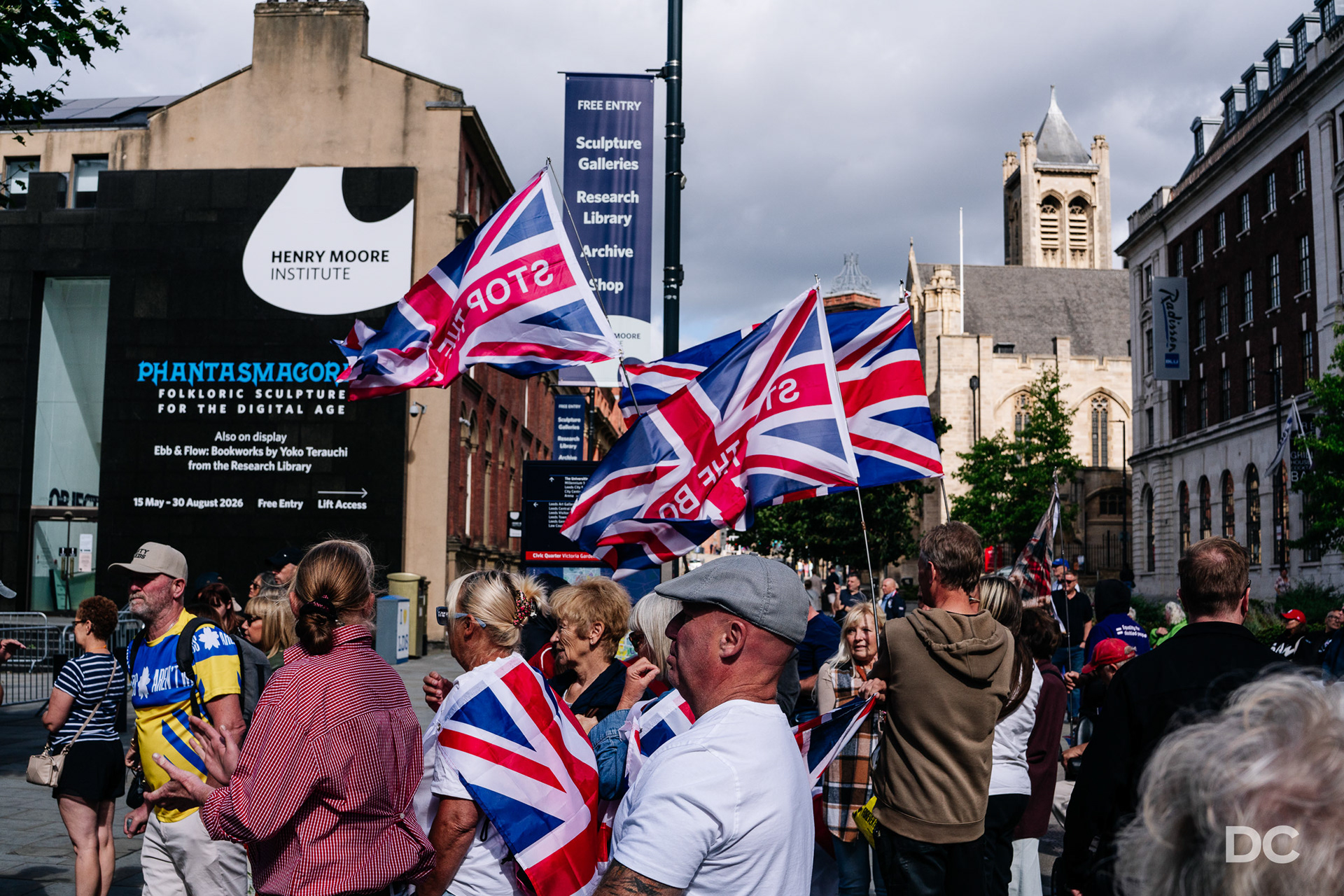
I arrived in Leeds on 5 September to photograph a far-right march and found two opposing protests. My intention was to move between them, speak to people and document what was happening. As I arrived, police stopped me and questioned me about my intentions.
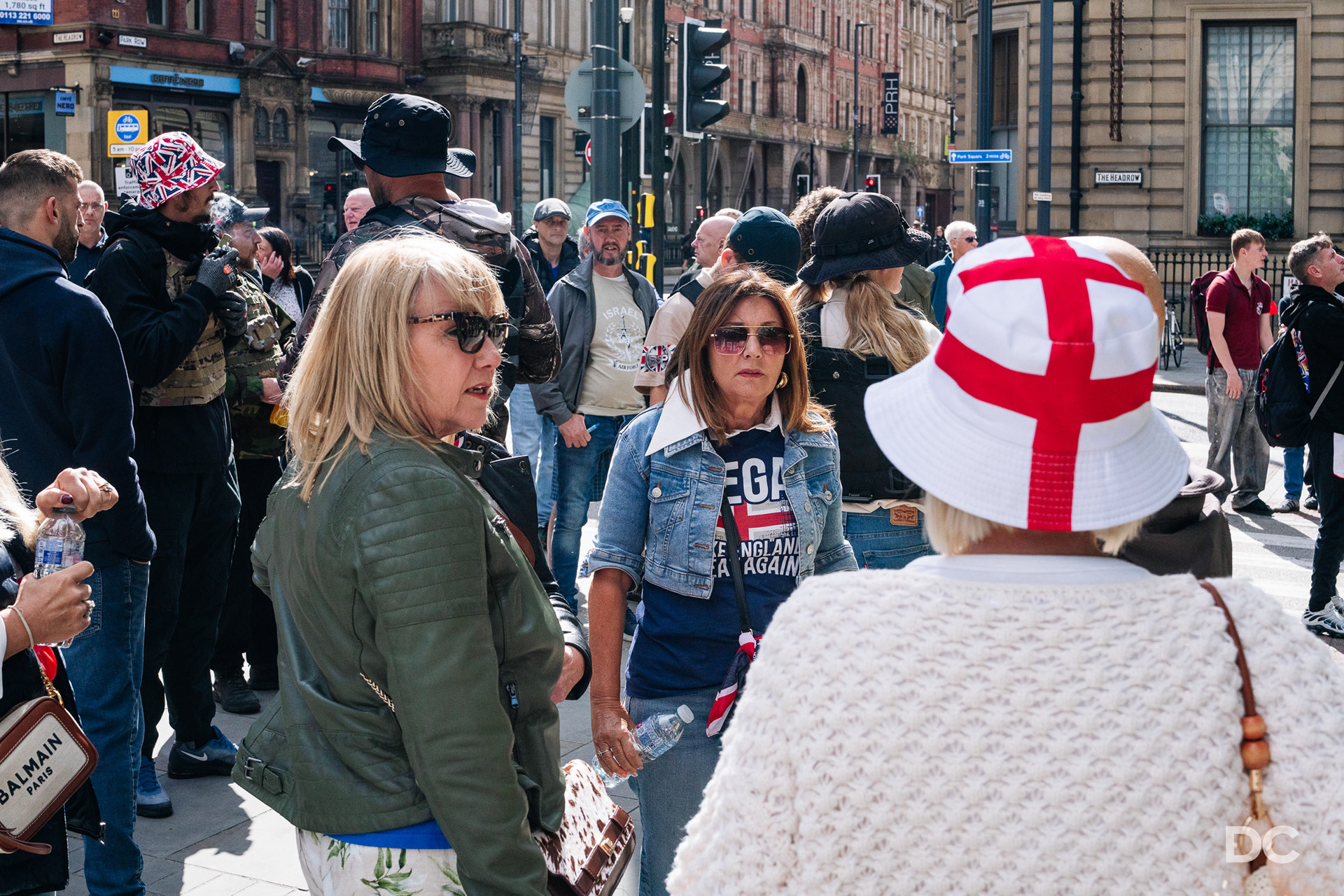
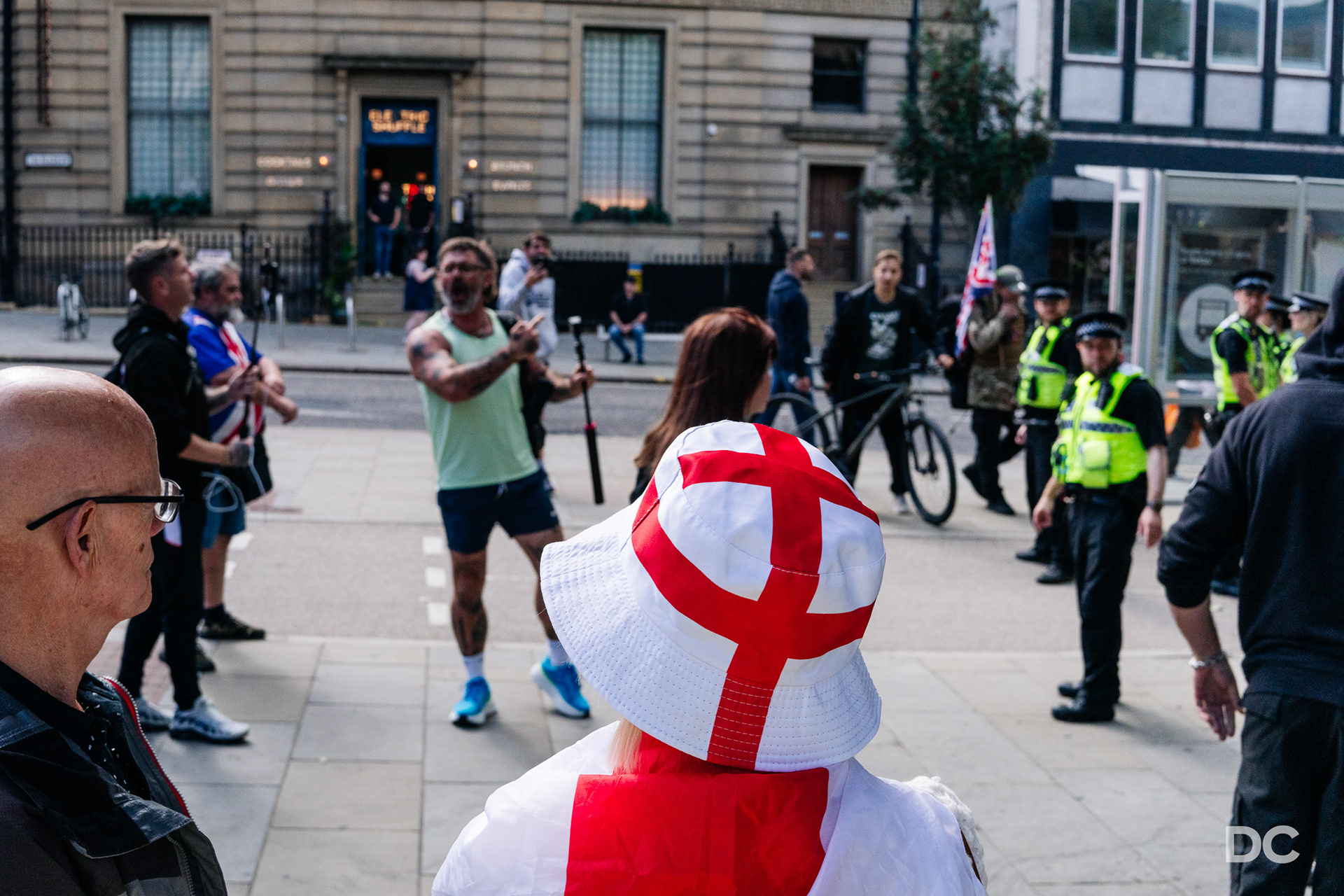
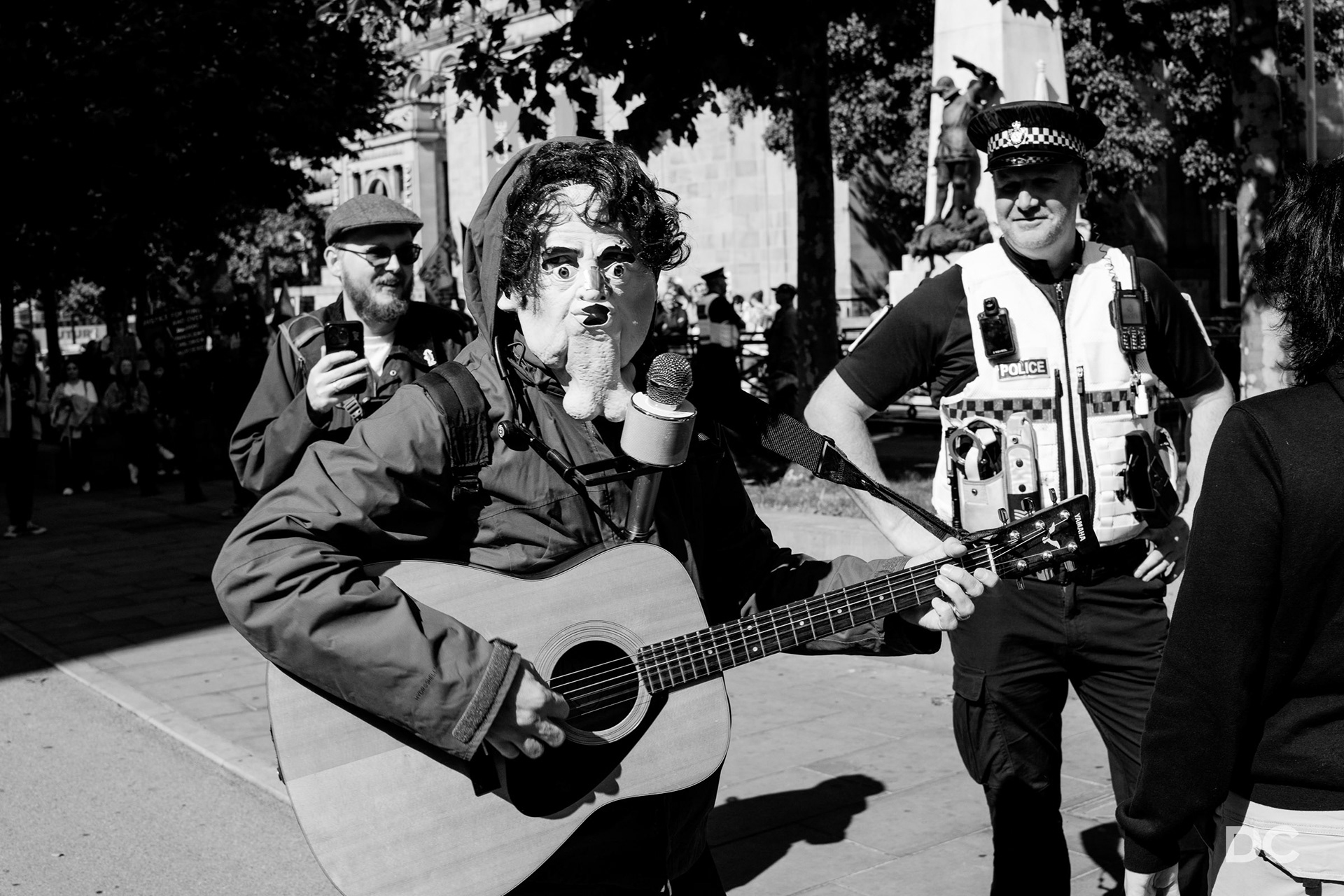
There was music playing on the far-right side, alongside shouting and abuse directed towards the counter-protesters. I also heard abuse aimed at people moving from one side to the other. As I began moving between the groups myself, that attention became personal.
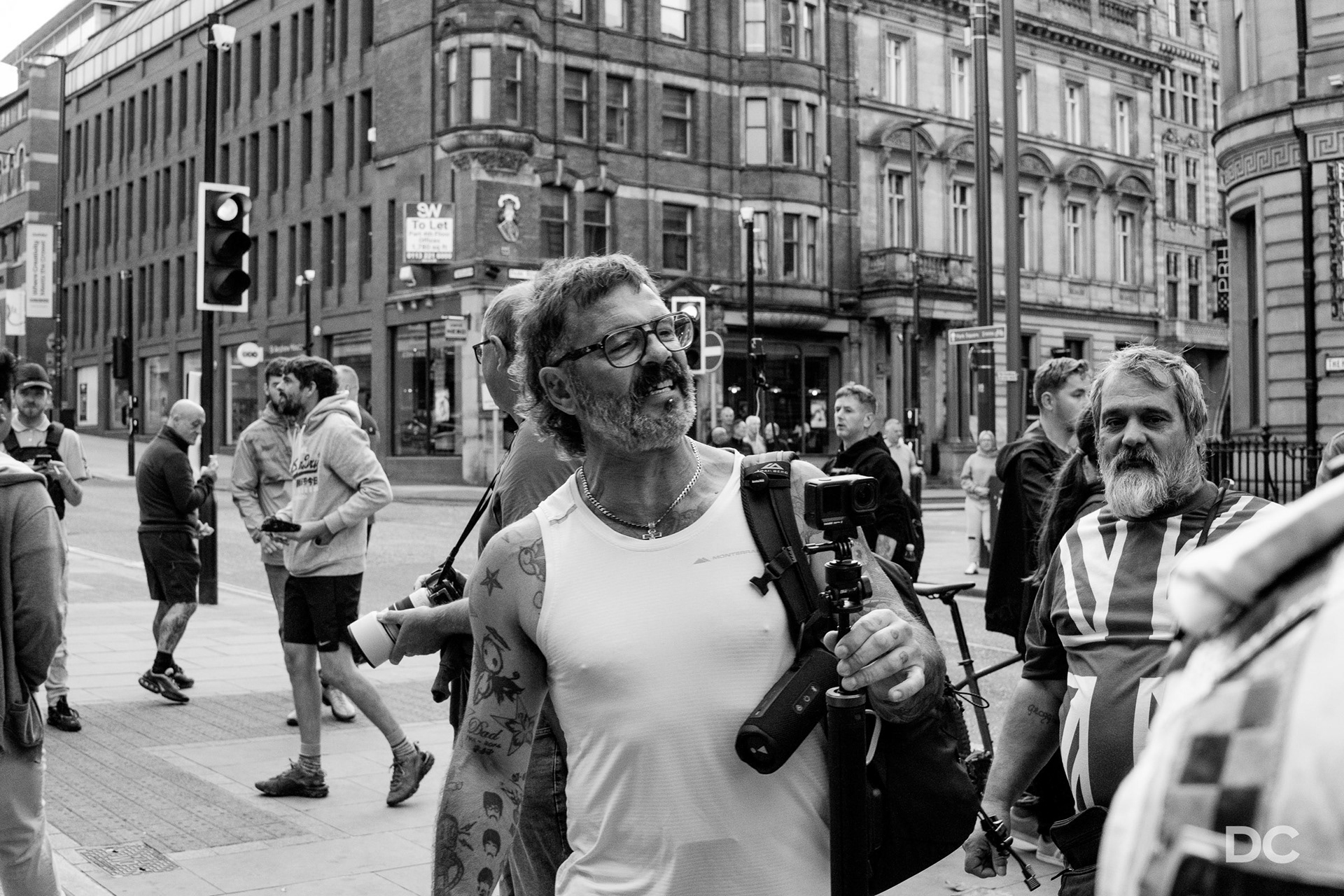
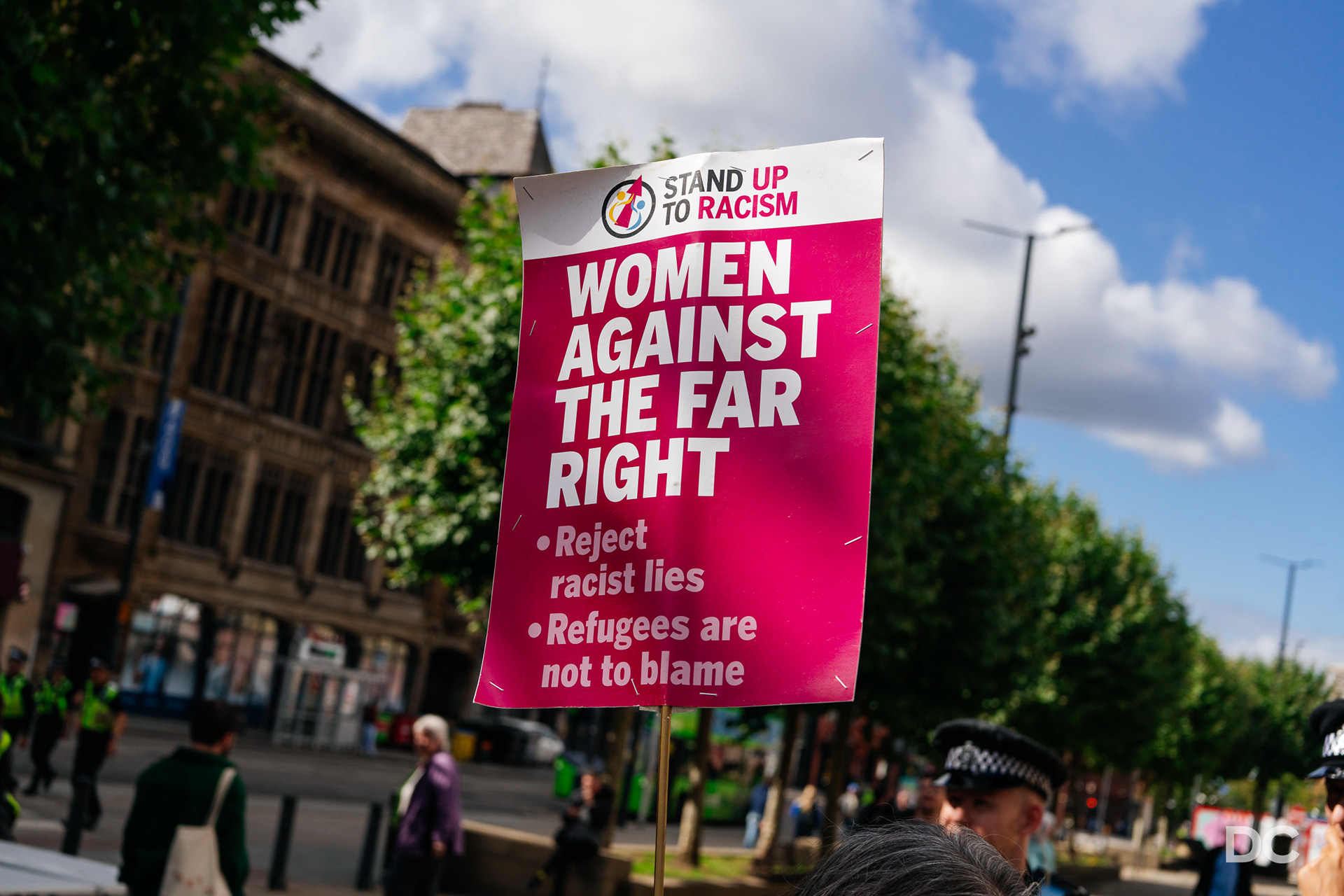
The first time I walked from the left-wing counter-protest towards the far-right group, I was approached aggressively and challenged. My presence on the other side appeared to have raised questions about why I was there.
My conversations with a couple of people at the counter-protest were different. They were peaceful and willing to speak, and did not challenge me about where I had just been. I could have a conversation without having to account for my movements.
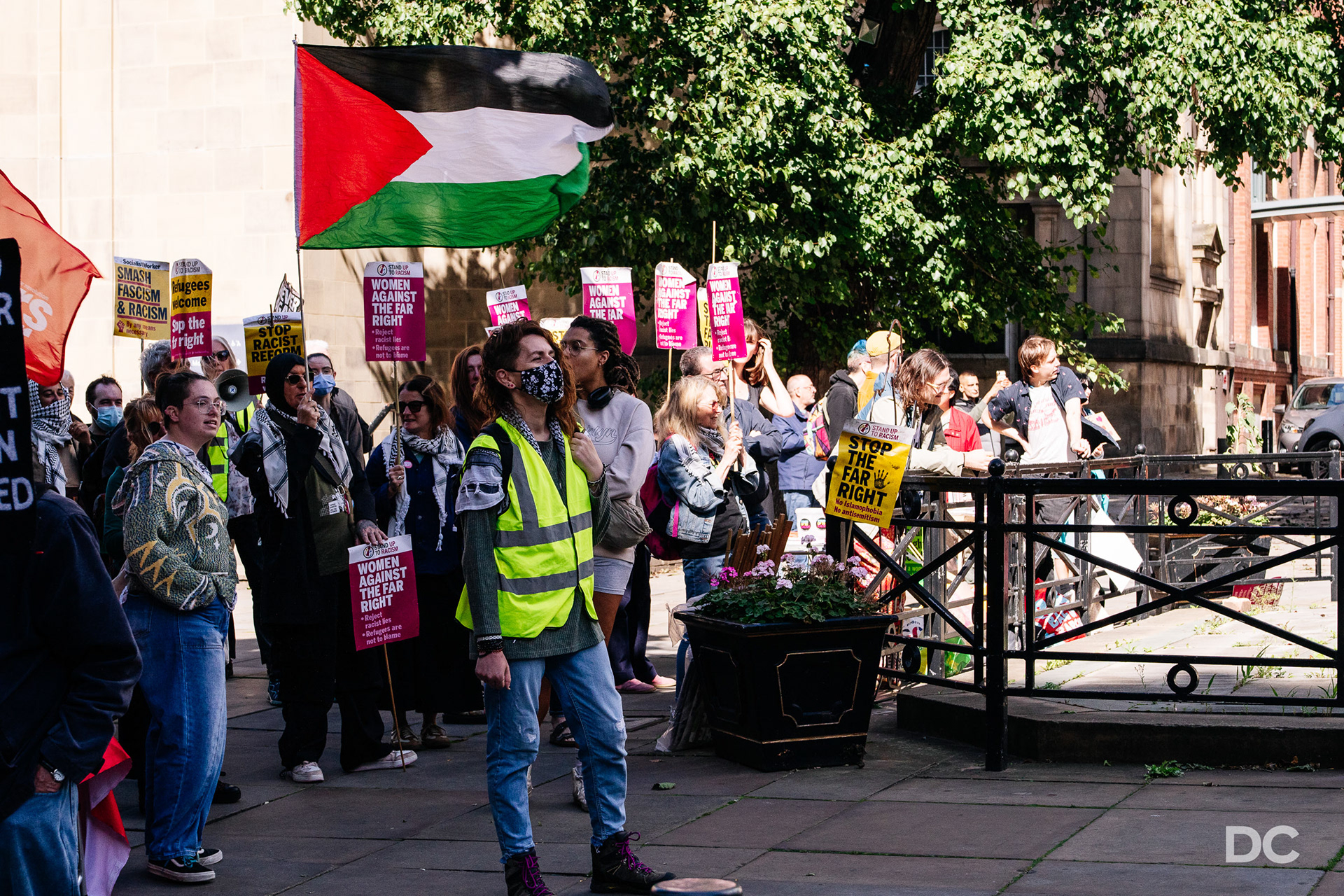
I also spoke to several other photographers who described themselves as independent and neutral. There were others, like me, trying to document the event without representing either group.
Each time I returned to the far-right side, I seemed to attract more attention. People watched me more closely, and I increasingly felt that moving between the two protests was being treated as suspicious. I could not know what individuals were thinking, but where I had just been appeared to matter to them.
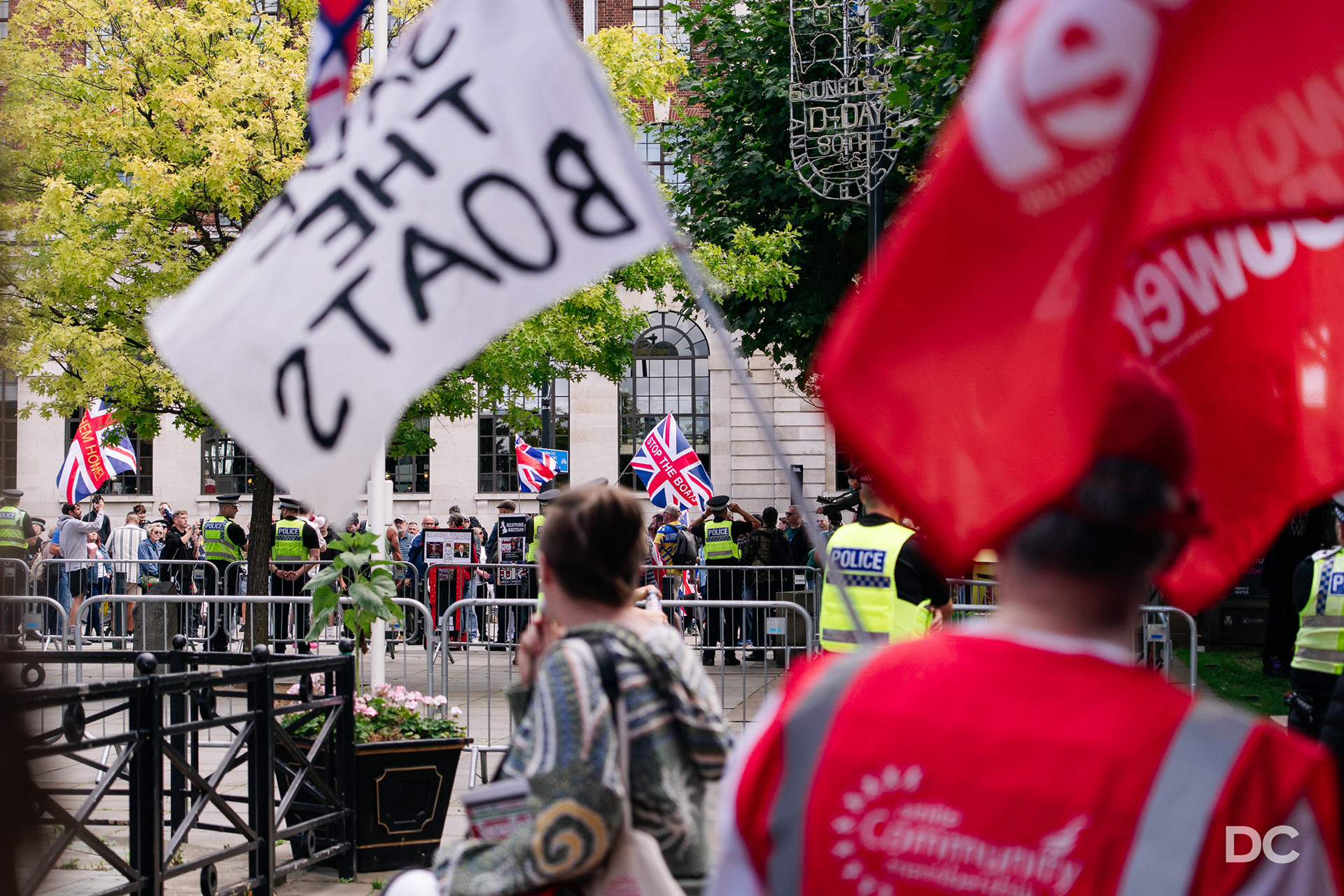
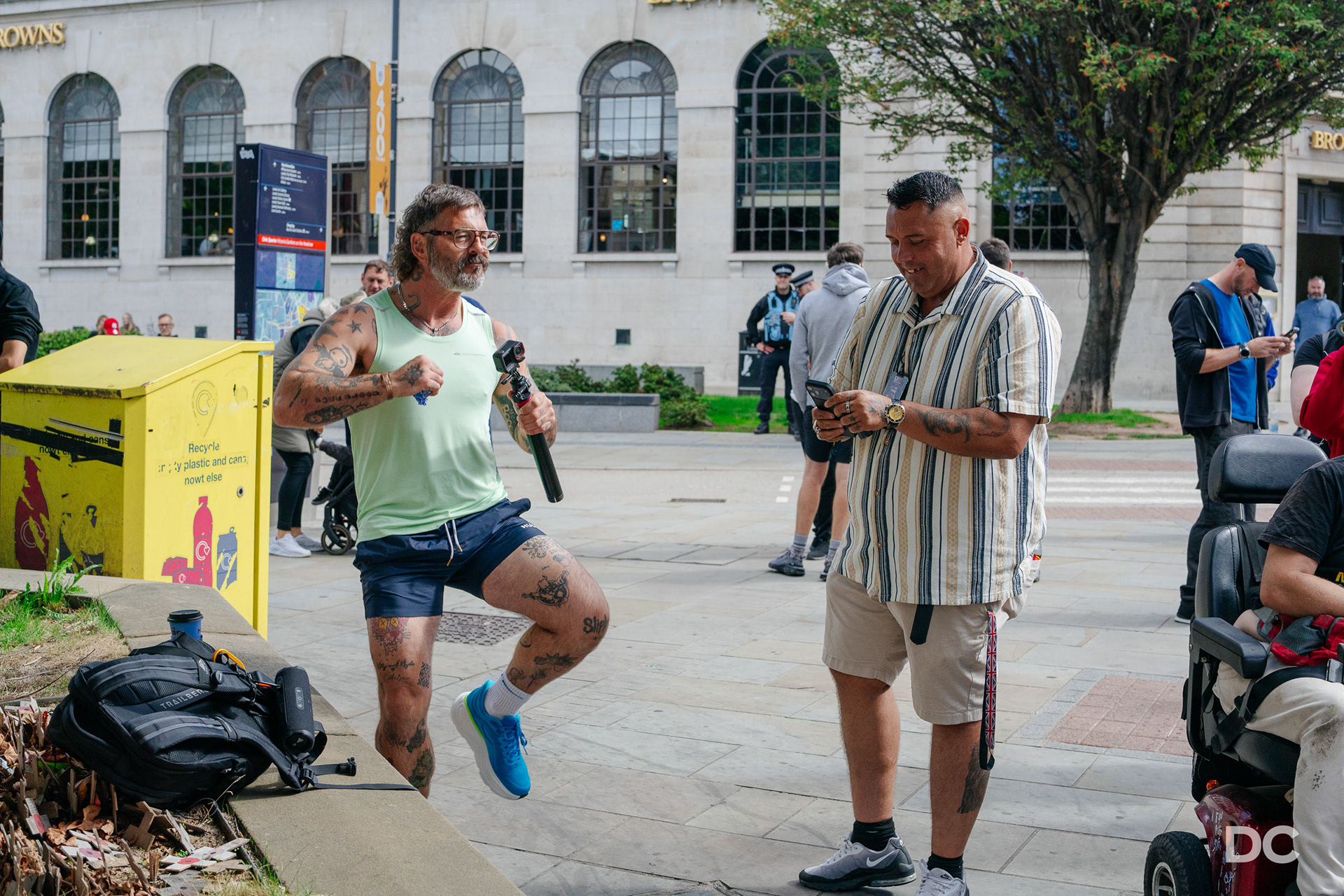
There were plenty of bloggers, YouTubers and auditors recording the day. Those I noticed were on the far-right side, livestreaming on their phones and cameras. Some appeared particularly confident while broadcasting. Watching them, I wondered how much having an online audience was shaping the way they interacted with people around them.
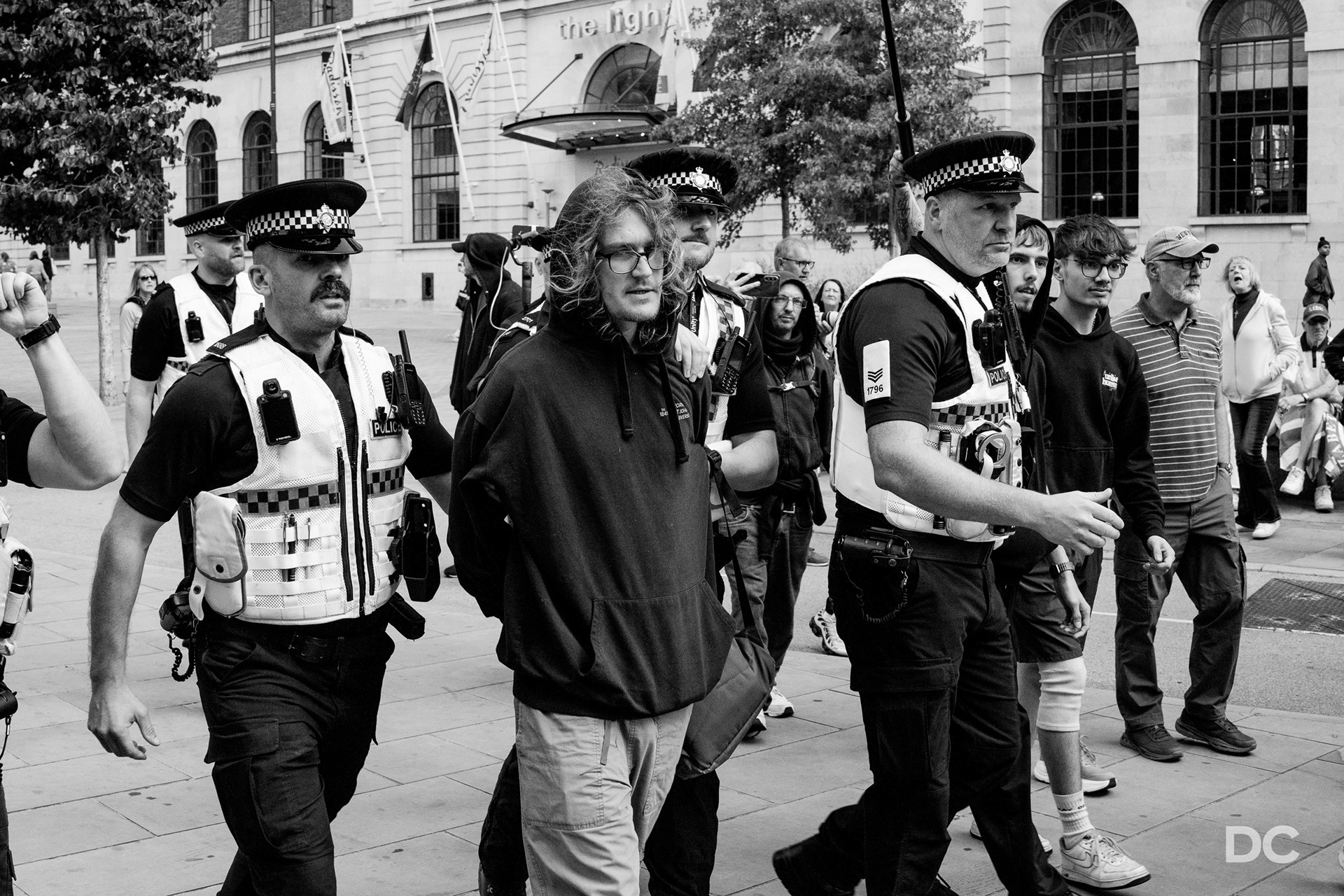
From what I saw, West Yorkshire Police were doing a good job of managing the situation. Most of the intervention I witnessed involved controlling behaviour on the far-right side. The counter-protesters appeared to require considerably less attention during the time I was there.
Towards the end of the protest, I returned to the far-right group and immediately felt a change in the atmosphere. People were looking at me more frequently than before. I had a strong sense that I was no longer welcome.
I heard one of the livestreamers say, “Insurgent, insurgent,” before putting his hand in front of my camera. Another man positioned himself in front of me while speaking to other people. It appeared to me that he was deliberately stepping into my frame.
I asked whether they were all right and whether they had something they wanted to say to me.
“No mate, why? What’s wrong?”
Soon afterwards, at least ten more people joined them and surrounded me, holding mobile phones, action cameras and other recording equipment. I was watched, questioned and verbally abused. I was pushed and shoved, and told to leave because I was not wanted there. Among the accusations were that I was “not being neutral”. I was also called a “lefty wanker” and “scum”.
Police advised me to leave and acknowledged that I had done nothing wrong. I left the group.
Afterwards, a fellow photographer told me he believed the group had seen me as a threat. He also said he had experienced similar abuse on a previous day. That was his interpretation of what had happened, but hearing about his own experience gave me something else to consider as I left.
I had arrived to photograph two opposing protests. I left thinking about how quickly a photographer’s movements can be taken as evidence of an allegiance. My reasons for being there had stayed the same throughout the visit, even as the reactions to my presence changed.