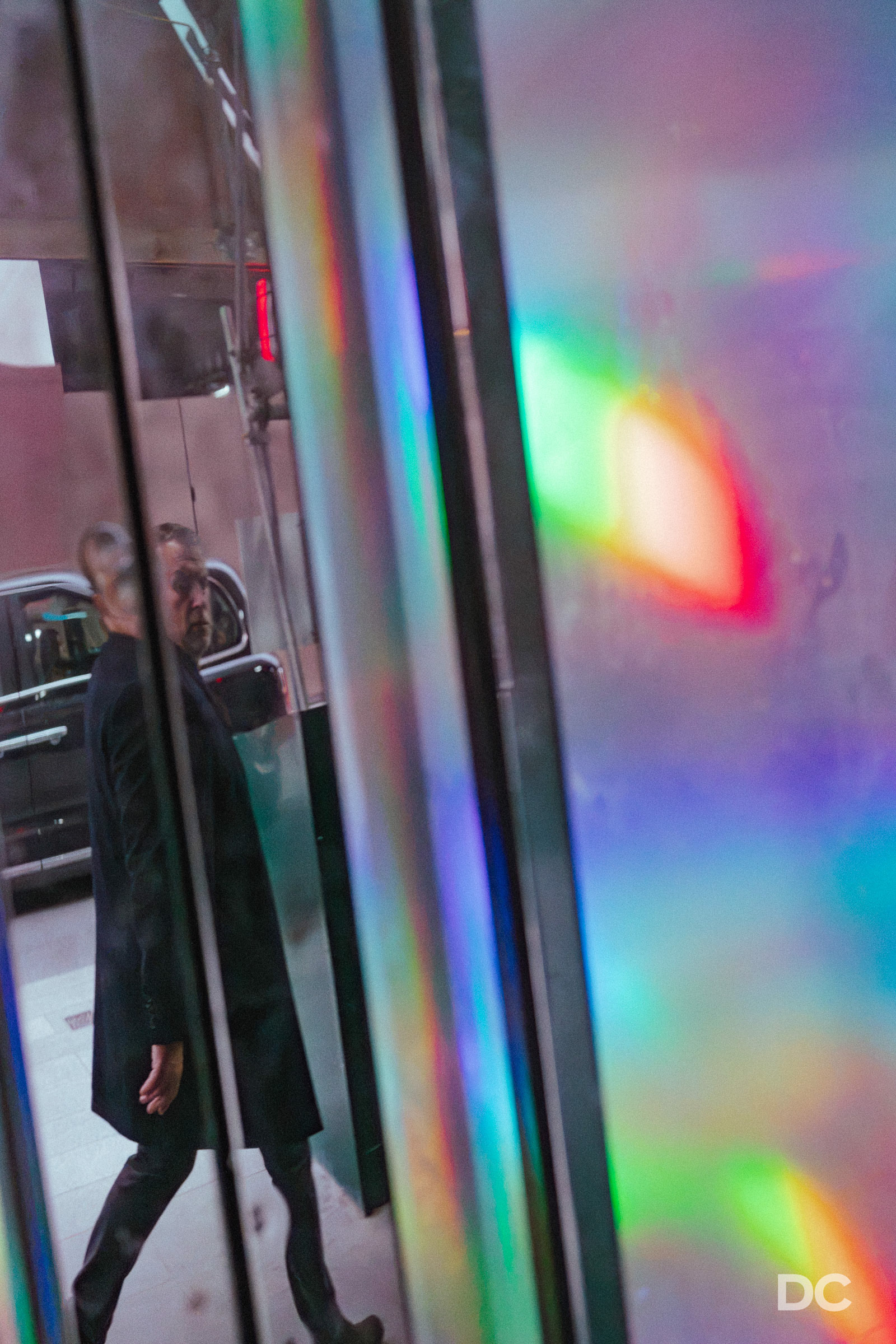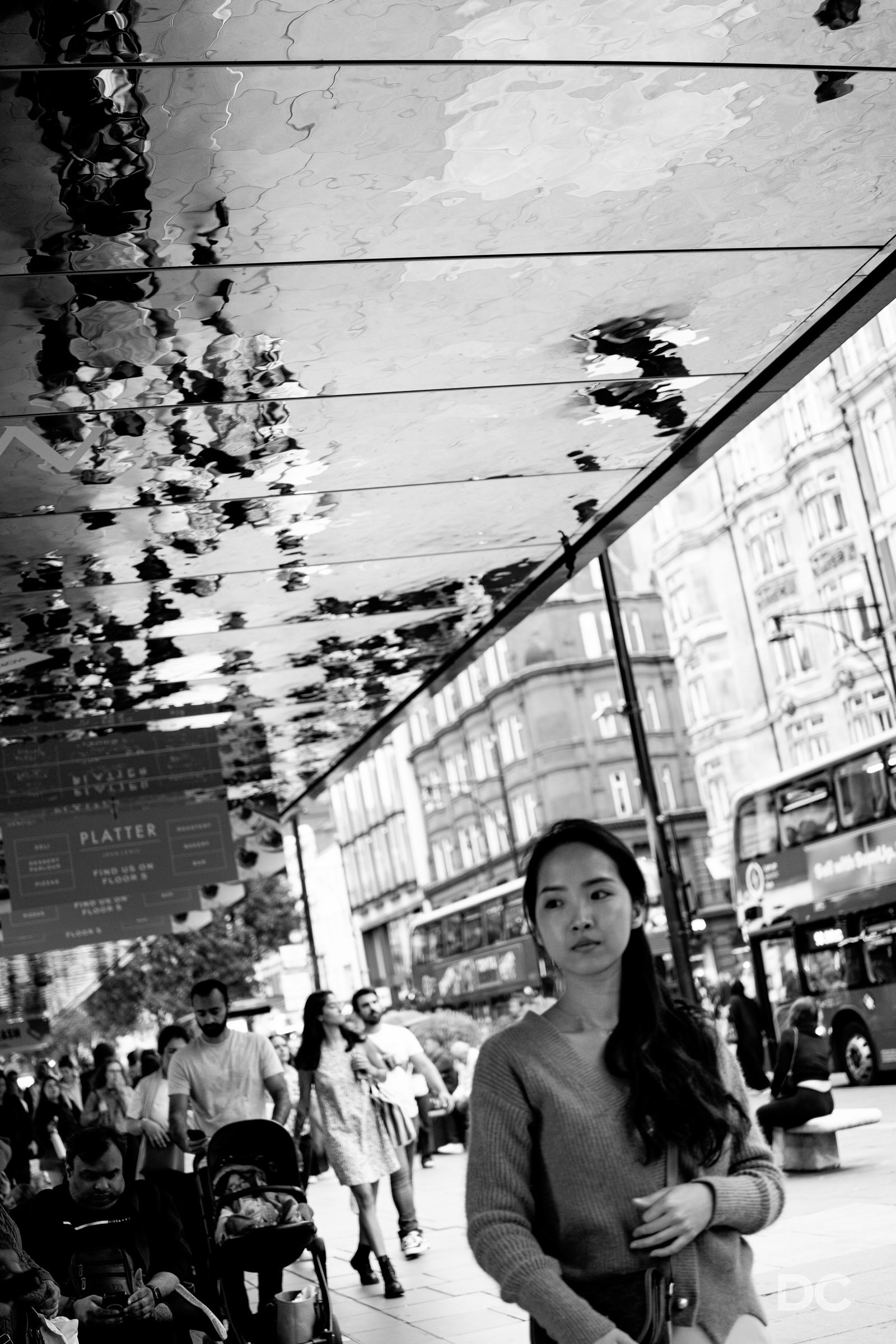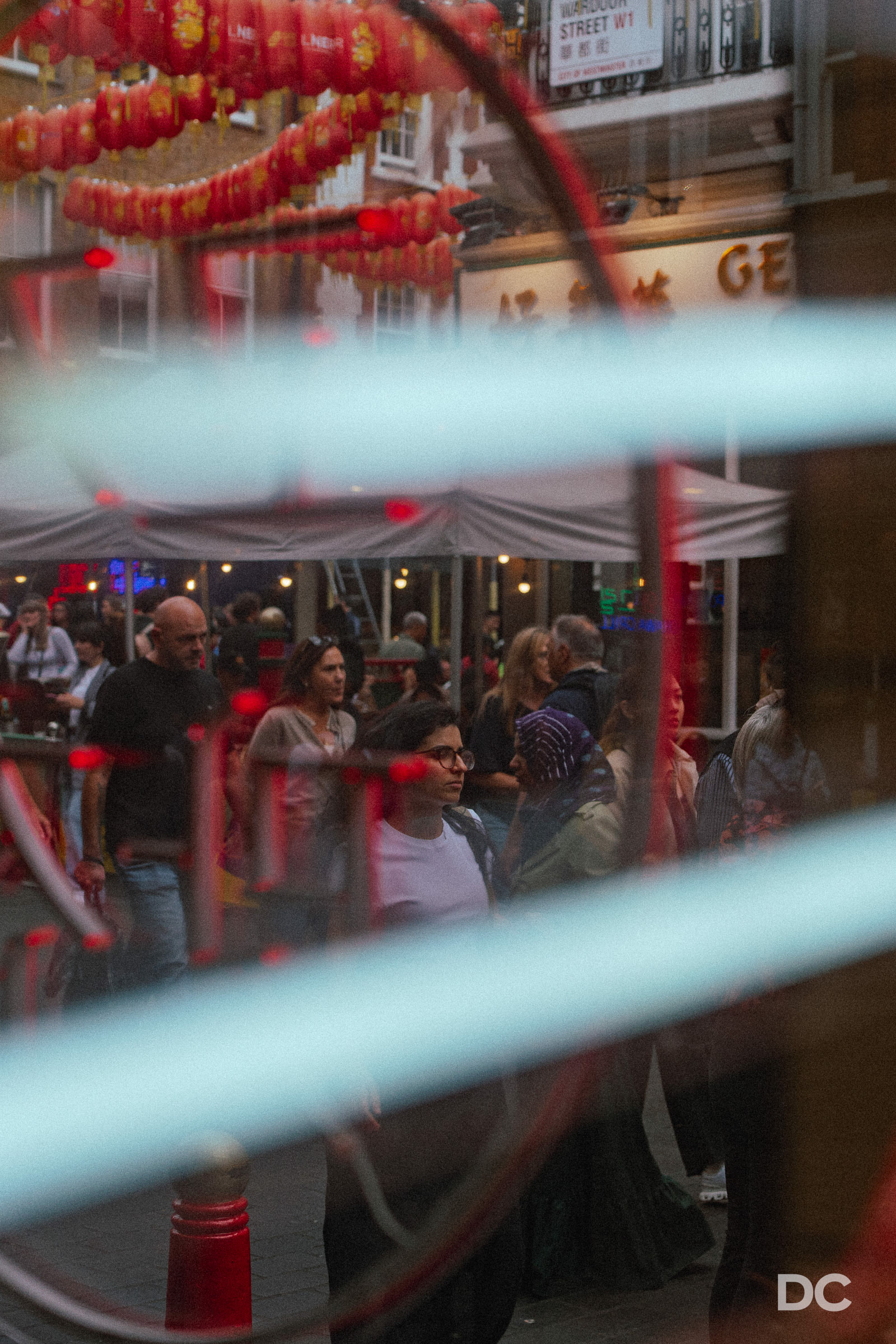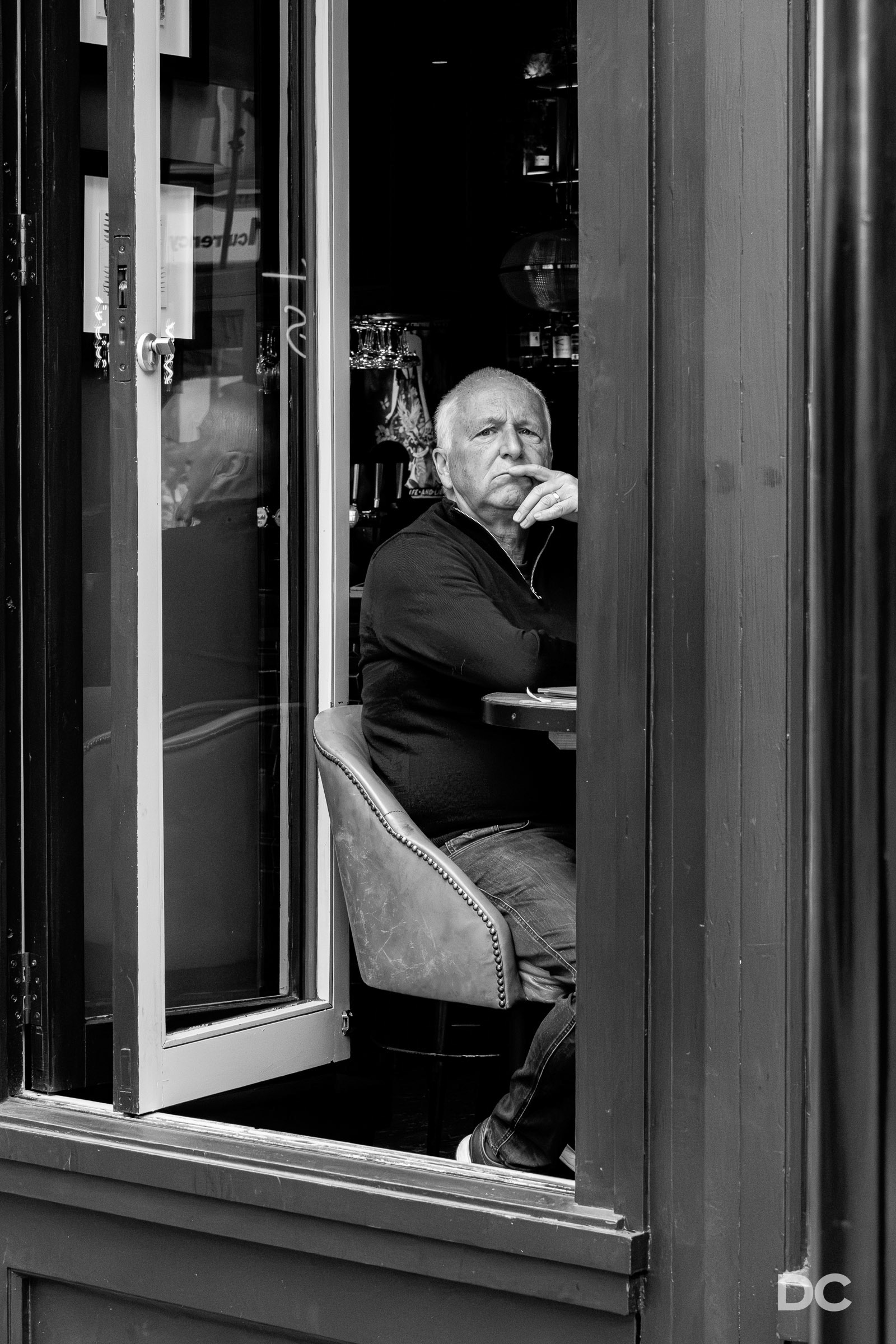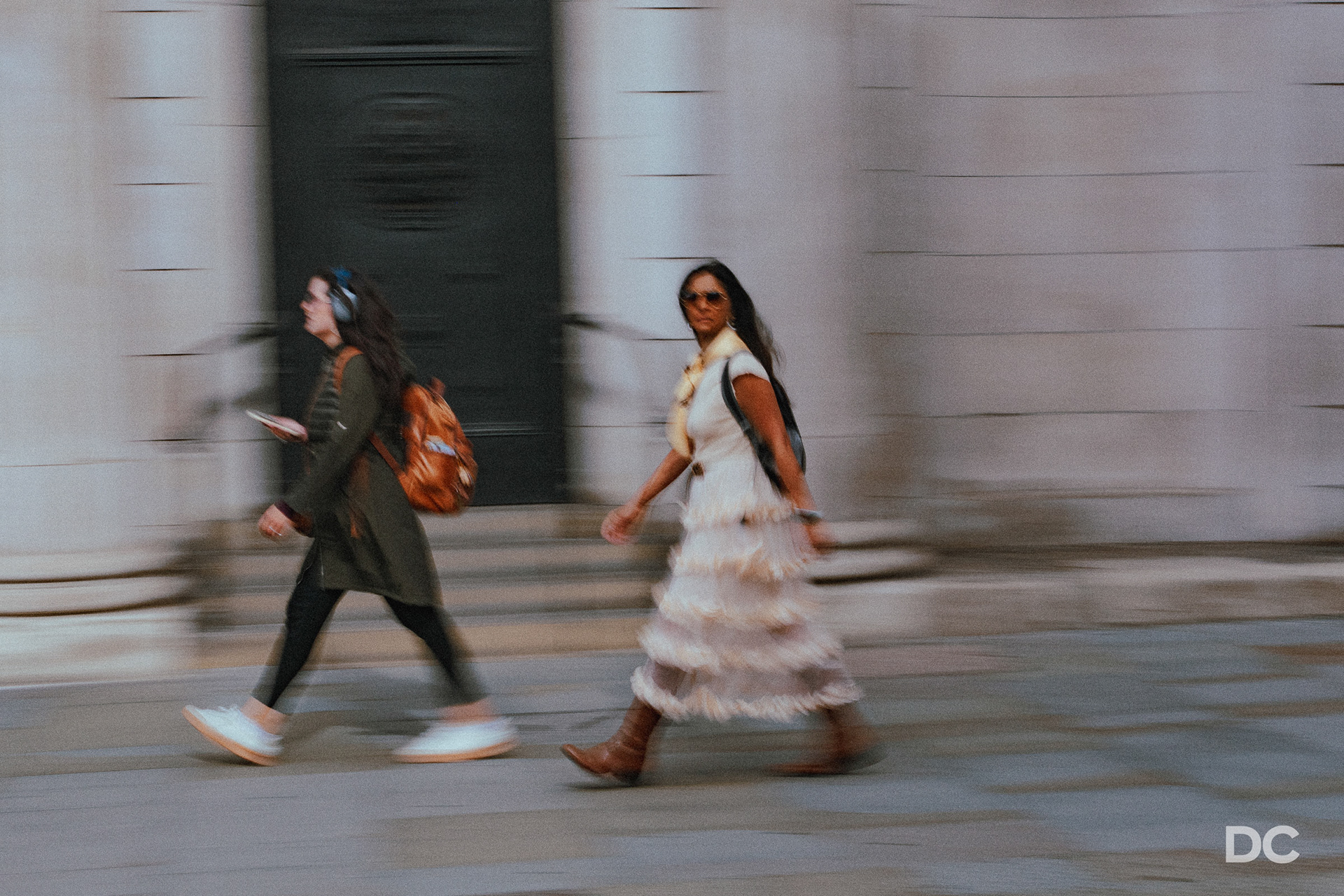
I caught an early train from Manchester and arrived at Euston at around 10am. The plan was fairly simple: spend the day moving through London with the camera, revisiting a few familiar places and seeing what presented itself. I wasn't really looking for anything specific. I rarely am. I just wanted to walk, observe and hopefully find something that felt worth photographing.
My first stop was the Barbican.
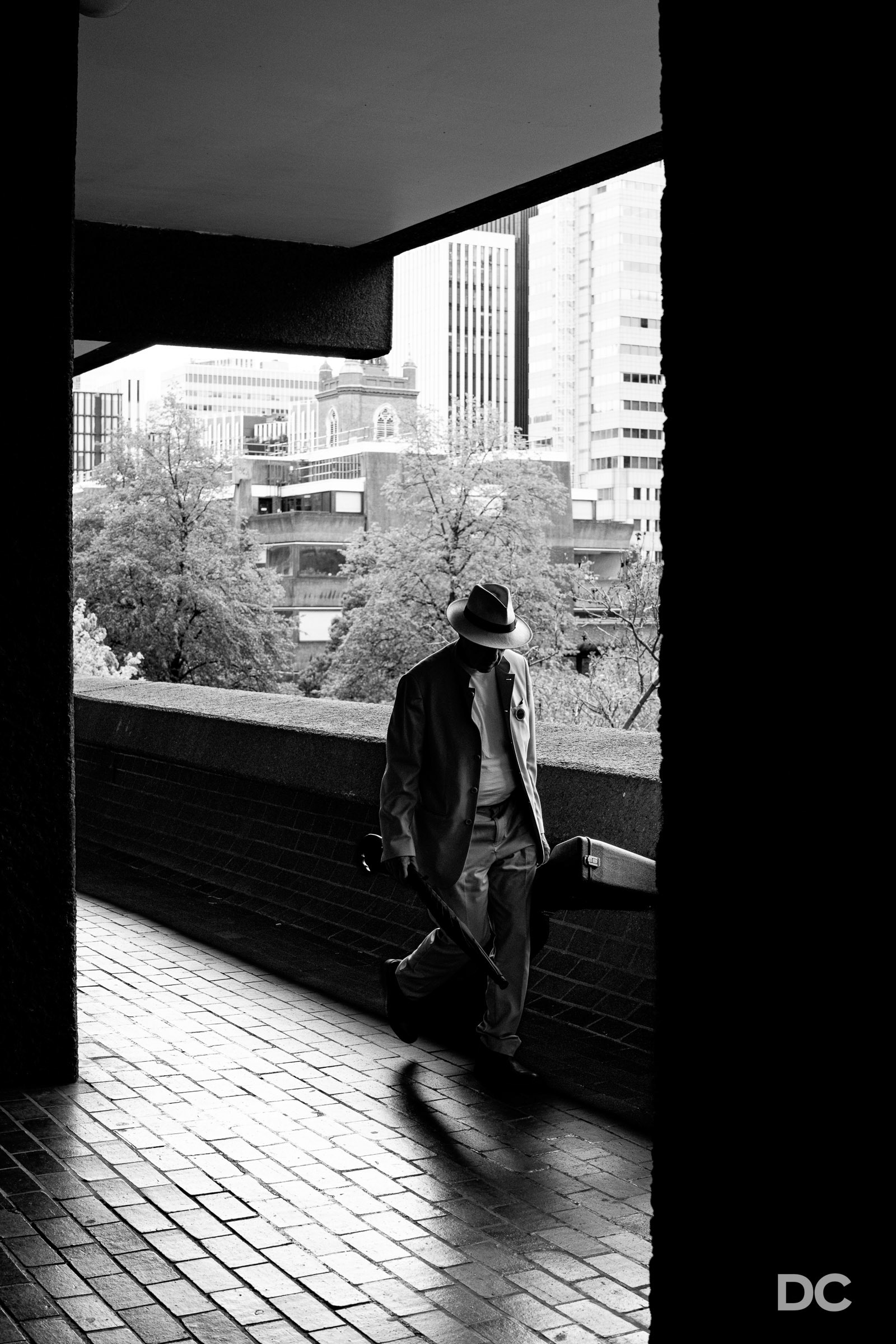
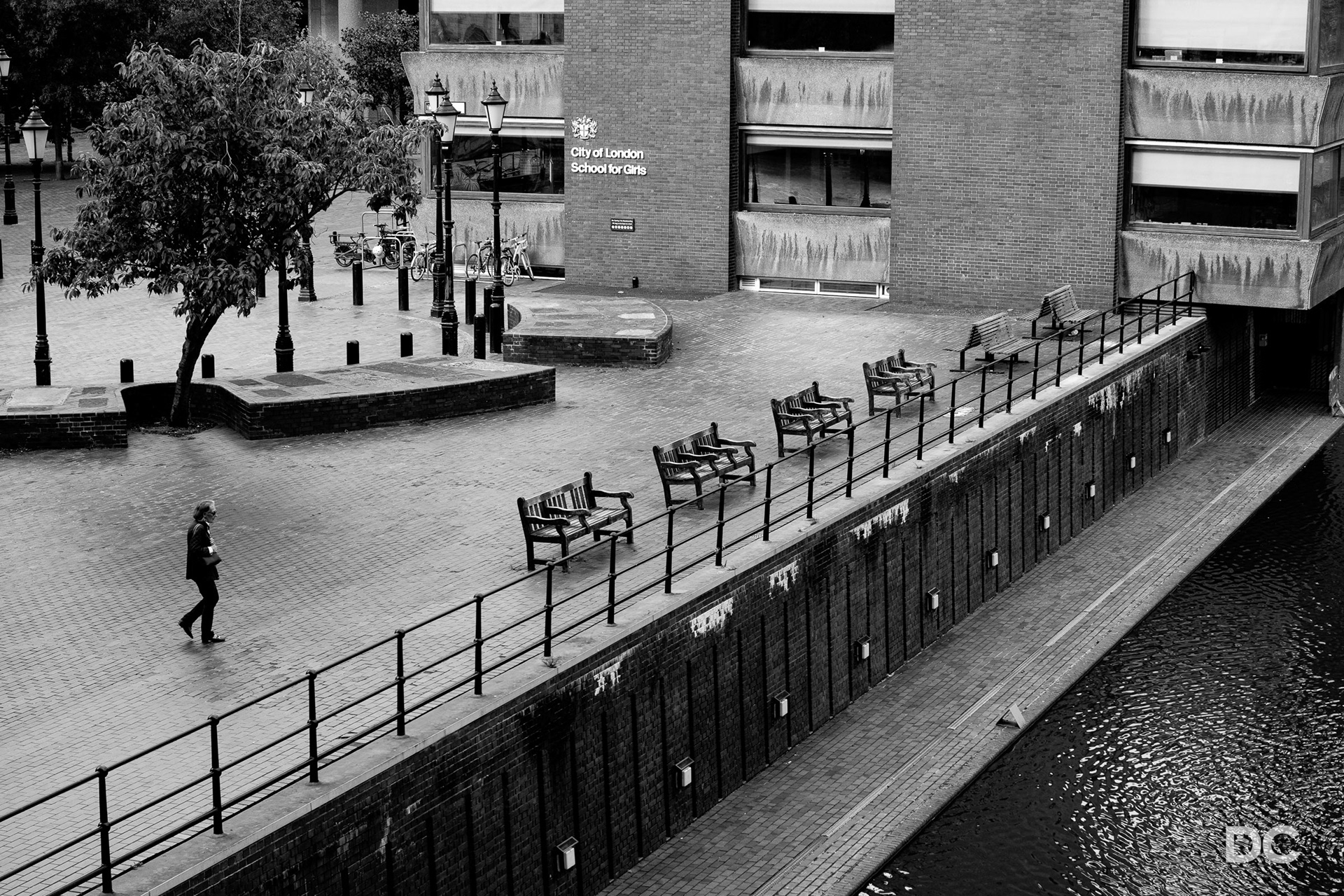
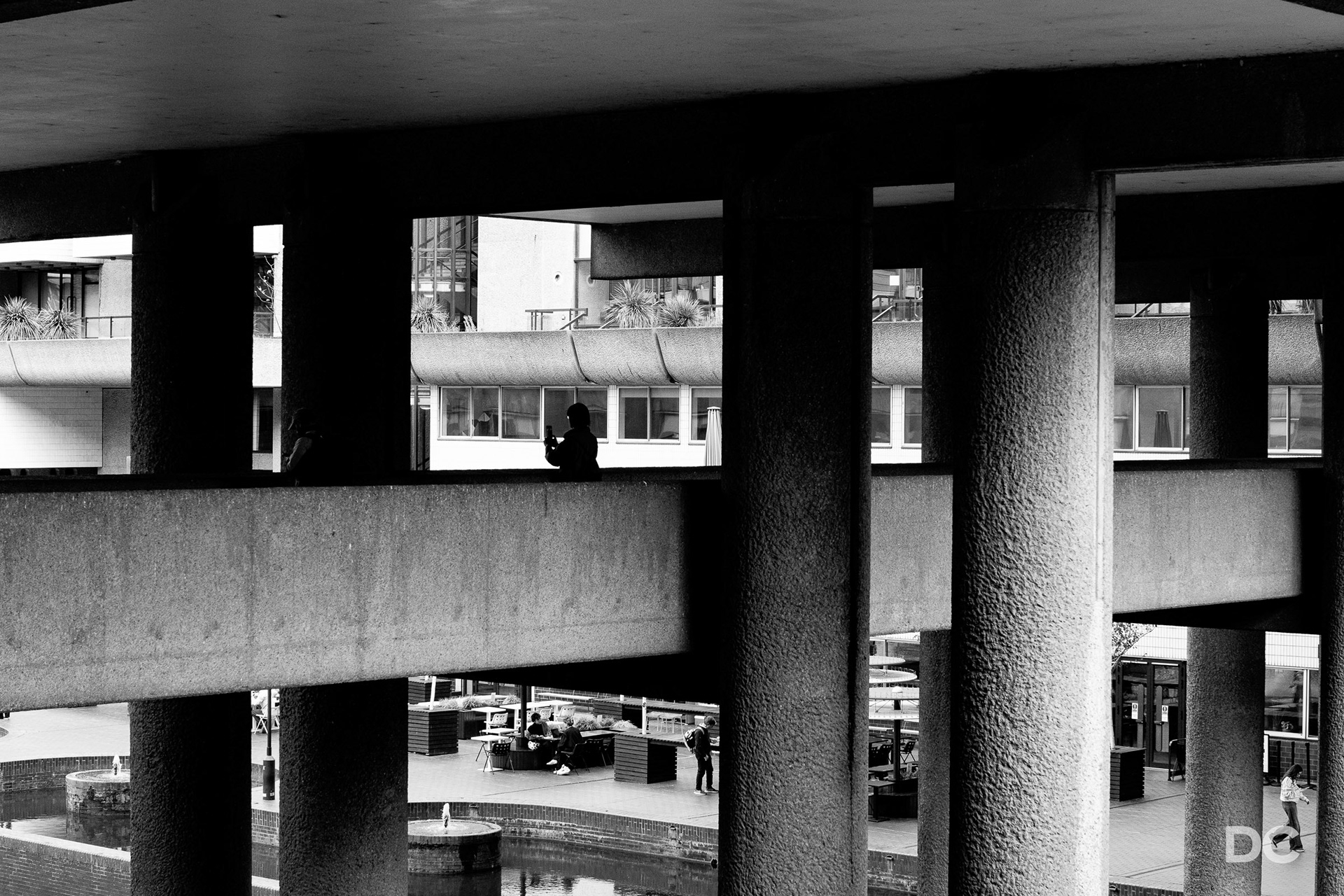
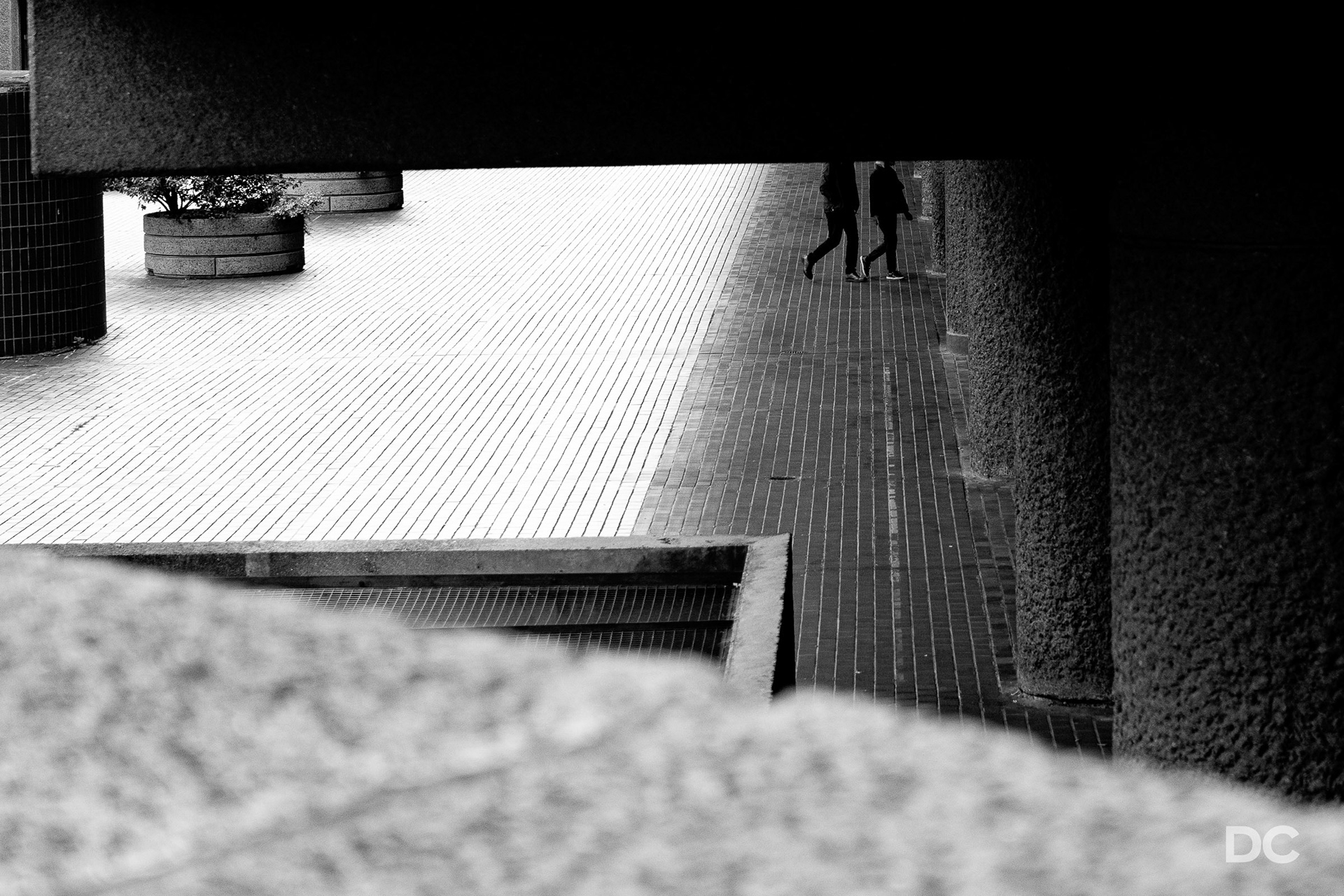
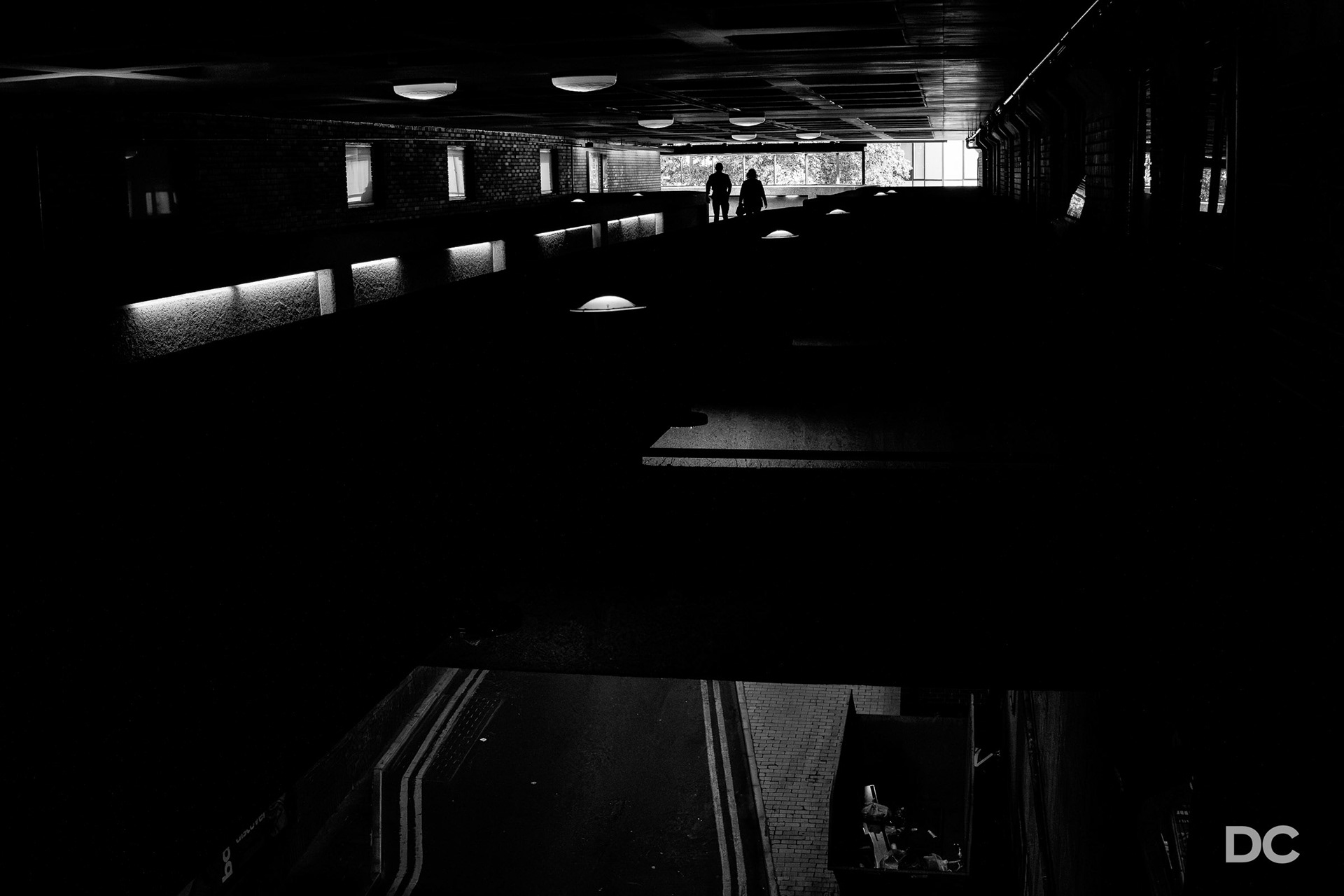
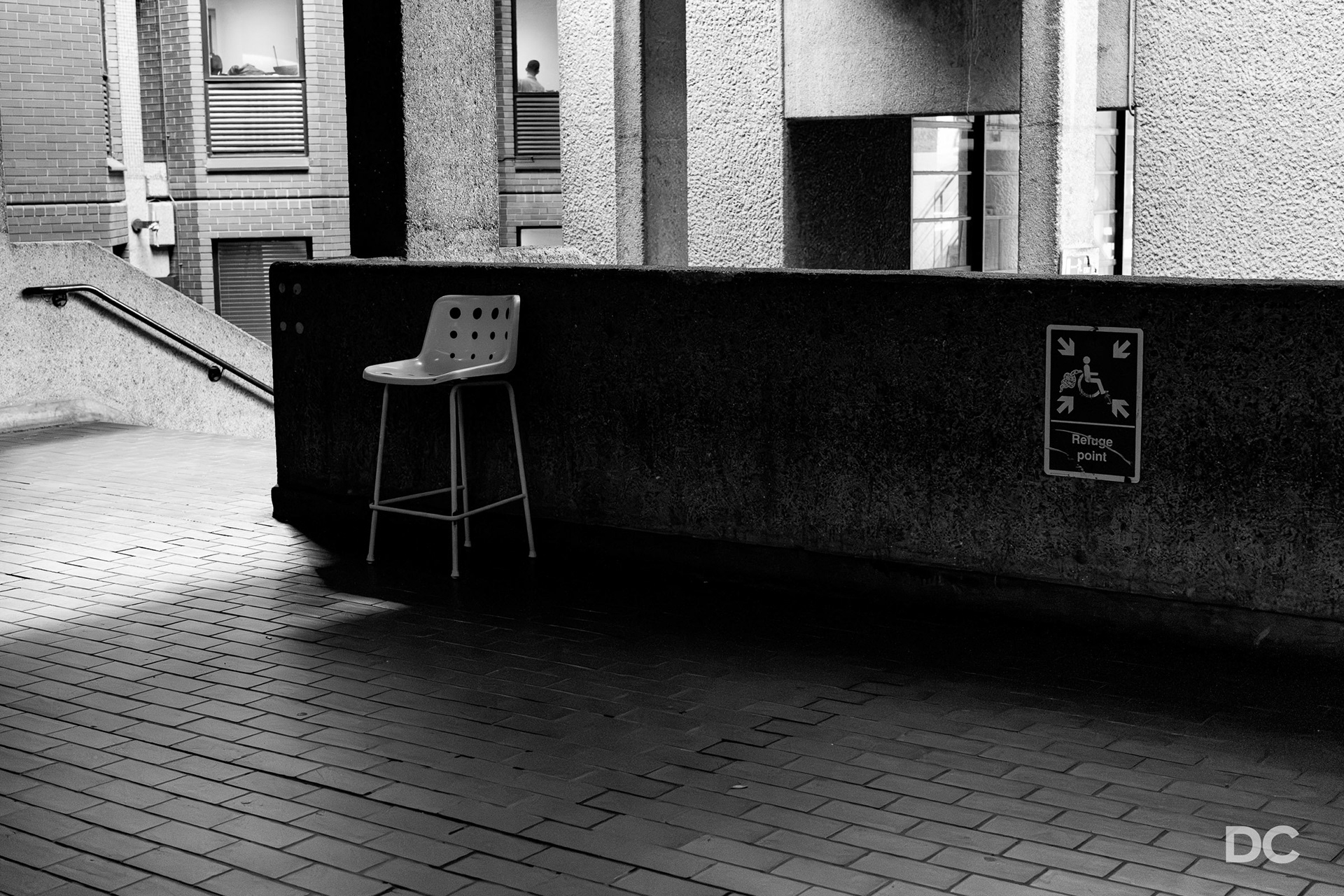
The Barbican is one of those places where I can usually find something, even when there is very little happening in the traditional street-photography sense. The brutalist architecture gives you something to work with before a person even enters the frame. Concrete, repetition, harsh lines, elevated walkways, windows, shadows and strange pockets of negative space all lend themselves to more abstract photographs.
It is probably one of the few places in London where I feel completely comfortable ignoring people altogether.
There is something satisfying about reducing a scene to shape, geometry and proportion. You don't necessarily need a decisive moment. You can slow down, look at how the buildings interact with one another and wait for a small human figure to appear simply to give the frame scale. It becomes less about documenting an event and more about constructing an image.
From there I moved towards Bank.
The City always feels slightly different to the rest of London. Even at the weekend there is a sense of scale and formality to it. Huge buildings, narrow streets and old architecture compressed against glass and steel. Again, I found myself much more interested in the environment than I was in the people moving through it.
I continued towards St Paul's Cathedral and then One New Change.
This was probably where the day began to lose some momentum.
The weather was flat, grey and uninspiring. There wasn't enough interesting light to create much separation and the area itself was surprisingly quiet. One New Change can work incredibly well when sunlight bounces between the glass buildings or when there are enough people moving through the space to create layers, but there was very little happening.
Without the light and without the crowds, it felt strangely empty.
I moved on.
Covent Garden was the complete opposite. It was busy, loud and full of people, but that created a different problem. There was activity everywhere, yet very little of it interested me photographically.
There are only so many photographs I can take of somebody walking past a shop window.
This is something I have increasingly struggled with in street photography.
Technically, there were photographs everywhere. People crossing the road, couples talking, tourists looking at phones, someone carrying shopping bags, somebody drinking coffee outside a café. You could probably stand in one place for twenty minutes and produce dozens of perfectly competent street photographs.
But I kept asking myself what the point was.
I don't get much fulfilment from photographing people simply because they happen to be walking through an aesthetically pleasing patch of light.
There has to be something more.
I crossed Waterloo Bridge and walked down towards the Southbank. Again, there were thousands of people around me, but very little seemed to be happening. People were sitting down, drinking, eating, scrolling through phones and talking to friends.
Normal life.
There is obviously nothing wrong with photographing normal life. Much of the history of street photography is built around exactly that. But increasingly I find myself questioning whether I personally find it interesting enough to photograph.
I walked for quite a while without taking many pictures.
The strange thing about London is that you can be surrounded by thousands of people and still feel completely isolated.
That was probably the overriding feeling of the day.
I eventually moved back towards Chinatown and then Oxford Circus. By this point I had already been walking for several hours and my enthusiasm for the day was beginning to disappear.
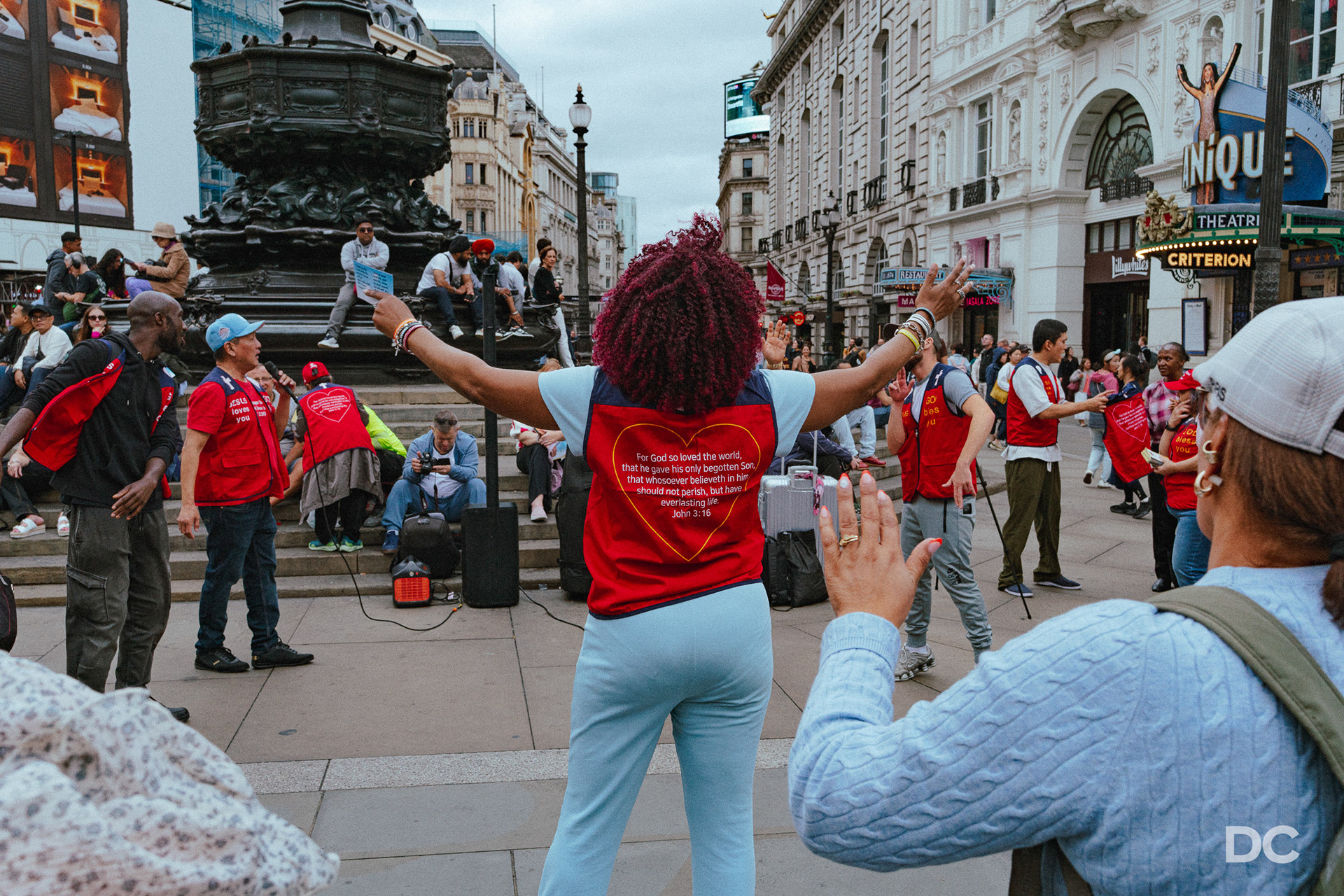
Somewhere around Oxford Circus I was approached by a group of evangelical Christians.
What started as a normal conversation quickly turned into the familiar pattern of circular arguments, leading questions and attempts to steer every answer back towards the same conclusion. They were perfectly happy to keep the conversation going indefinitely, but I wasn't.
After about five minutes I decided I had heard enough and carried on walking.
By this point it was around 5pm and the weather finally gave up completely.
The rain arrived.
I headed underground, caught the Tube back towards Euston and effectively called the day finished.
On the train home I started thinking about why the day had felt so unsatisfying.
Strangely, those thoughts had actually started much earlier.
On the journey down to London I had begun watching a documentary called Everything Happens All The Time by Simon King. It follows street photographers talking about their work and their relationship with photography.
What struck me most was the amount of philosophy attached to something that, at its most basic level, is incredibly simple.
Walking around.
Looking.
Taking photographs.
For some photographers the camera is clearly therapeutic. It gives them a reason to leave the house, explore a city, observe people and process the world around them. I completely understand that.
Where I struggle is with the idea that every photograph necessarily needs to carry some enormous philosophical meaning.
Sometimes somebody is simply walking through a shaft of light.
Sometimes somebody is eating a Greggs pasty.
Sometimes two strangers happen to line up in a frame.
And sometimes that is all there is.
The problem is that social media has created an entire culture around repeatedly presenting these moments as if they are profound.
Spend enough time looking through street photography on Instagram and you quickly begin to recognise the formula.
A silhouette under a bridge.
Someone walking through a patch of sunlight.
A person framed between two buildings.
A reflection in a shop window.
A pedestrian carrying an umbrella.
A small figure against a large wall.
None of these things are inherently bad photographs. Some are visually excellent.
But after seeing thousands of them, I struggle to find much meaning in them.
There are photographers with tens of thousands of followers who appear to reproduce variations of the same photograph week after week because they have discovered what performs well online.
The algorithm rewards familiarity.
So the photographs become familiar.
And eventually an entire genre begins feeding itself.
Photographers imitate photographers who are imitating other photographers, while everybody talks about storytelling, moments and the poetry of the everyday.
I'm increasingly unsure how much of it I believe.
Maybe that sounds cynical.
Perhaps it is.
But I think questioning your own photography is healthier than blindly repeating it.
The day in London forced me to confront something I have probably been thinking for a while.
I am not sure traditional street photography interests me as much as it once did.
The photographs I find myself enjoying most are increasingly about environments rather than people. Architecture. Isolation. Geometry. Distance. Decay. Colour. Space.
People can exist inside those photographs, but I don't necessarily want them to be the subject.
Perhaps that is why the Barbican remained the most interesting part of the day.
I wasn't waiting for somebody interesting to walk past.
I was looking at the place itself.
Maybe the problem isn't that I have lost interest in photography.
Maybe I have simply lost interest in a particular definition of street photography.
That feels like a much more interesting question to explore.